📁 World news
Chinese markets lose trillions as race for AI supremacy with US takes its toll
E
Editorial Team
2026-10-27
👁 21 views
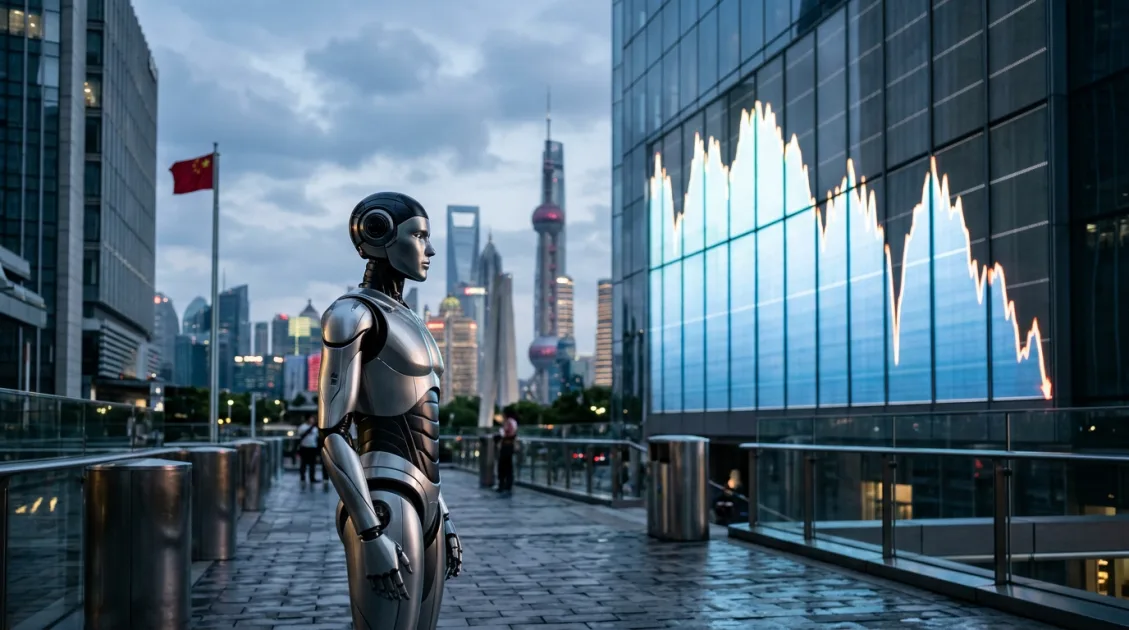
Beijing has doubled down on robotics – also known as embodied AI – as the key to rolling out the technology across society. Photograph: China News Service/Getty Images
China’s fast-growing artificial intelligence industry is facing new problems as technology shares fall sharply and concerns grow about whether companies can make enough money. Investors are also worried that the United States and other Western countries could introduce more restrictions on Chinese technology.
Since May, around $2.4 trillion has been wiped from the value of China’s stock market, according to Bloomberg. The STAR 50 Index, which follows technology and innovation companies listed in Shanghai, has fallen by about 40% since June. Other major stock market indexes have dropped by around 20%.
AI companies make up more than 40% of the total stock market value in China and Hong Kong, according to Goldman Sachs. This means falling technology shares can have a major effect on the wider market.
The decline raises questions about whether China’s economy can support the rapid growth of its technology industry, despite strong government backing.
Companies struggle to make money
The Chinese government has spent heavily on AI development. A new state-backed investment fund worth 60 billion yuan began providing money to Chinese AI developers this month.
However, many Chinese consumers are still careful about spending money. This makes it difficult for technology companies to find enough customers and earn steady profits.
Dan Wang, China director at the Eurasia Group, said company profits had been weaker than expected. She also pointed to higher US interest rates and weak demand inside China.
These problems have created growing uncertainty among technology companies about whether government support alone can keep the industry growing.
Another concern is the risk of new restrictions from Western countries, particularly the United States. Washington has banned humanoid robots from China, citing national security concerns, and is reportedly considering restrictions on Chinese parts used in data centres.
China depends heavily on exports, so limits on sales to the US could hurt Chinese businesses. At the same time, weak demand at home makes it harder for companies to replace those lost sales.
China’s robot industry faces a difficult future
China has made robotics a major part of its AI plans. The government hopes robots will help bring AI into everyday life and address problems caused by an ageing population and a shrinking workforce.
But many robots remain too expensive or impractical for ordinary people to use at home. Government departments and research centres are currently more important customers than households.
Humanoid robots and robotic dogs have attracted attention in entertainment and public demonstrations, but they have not yet become useful products for most homes.
Shares in Unitree, one of China’s leading robot makers, have fallen by half since the company began trading in August.
Wang said it was difficult to see how advanced robots could make large profits from everyday consumers in the near future. Low profit margins and weak demand remain major problems.
Investors are not rushing back
China’s government wants local investors to put more of their money into Chinese companies. Officials have also introduced tighter rules on overseas investment, with further regulations due to take effect on 1 December.
However, these steps have not yet brought a major increase in investment in Chinese markets.
Some investors remain hopeful about other areas of technology, including AI research and satellites. Satellite technology may receive long-term government support because it is also important for military purposes.
The global AI industry is still expected to grow for at least another year, but China has fewer major company listings on the horizon than the United States.
On Monday, US AI company Anthropic, which makes the Claude chatbot, filed paperwork ahead of a planned stock market listing. The company could attract as much as $100 billion, making it one of the biggest stock market debuts ever.
China has no similar major AI listing expected soon.
Beijing faces difficult choices
Investors are looking for government action to support China’s economy and encourage more spending. However, major new support measures are not expected during the current politically sensitive period.
Senior Chinese Communist Party officials are meeting this week for the fifth plenum, an important gathering that will help shape plans for the country’s future. Attention is also turning towards next year’s 21st Party Congress, where Xi Jinping is expected to receive approval for a fourth term as China’s leader.
During this period, officials may be unwilling to introduce risky economic measures that could fail or cause unexpected problems.
Wang warned that a major stimulus plan could carry serious risks for the officials responsible for it.
China’s government still sees AI and robotics as important parts of the country’s future. But falling share prices, weak consumer spending and possible US restrictions are raising doubts about how quickly the industry can grow—and whether its companies can turn that growth into lasting profits.